
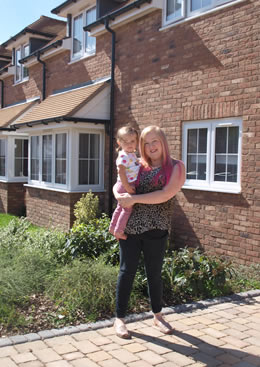
Pride Month tends to be pictured in cities. The flags, the marches, the venues, the visible community all cluster in places like Manchester, Brighton and London. But roughly one in five people in England lives in a rural area, and LGBTQ+ people are among them. They farm, teach, nurse, run village shops and raise families in the same villages everyone else does. What they often do not have is a secure, affordable home that lets them stay.
That gap is worth talking about this June, because rural housing and inclusion are more closely tied than they first appear.
The basic problem is familiar to anyone who works in this sector. Rural house prices have run far ahead of rural wages for years. Second homes and holiday lets remove properties from the local market. Affordable supply is thin, scattered across small sites, and slow to come forward. The result is that young people, key workers and lower earners are quietly priced out of the places they grew up in.
For LGBTQ+ people, several of these pressures compound. National research has consistently found that LGBTQ+ adults face a higher risk of homelessness and housing insecurity, and that younger people in particular are more likely to leave home early after family rejection or strained relationships. In a city, leaving home and finding somewhere else, however imperfect, is at least conceivable. In a village with almost no rented stock and a months-long social housing waiting list, it can mean leaving the area entirely.
So the question of whether someone can find an affordable home in their own community is not a neutral one. For some residents it also decides whether they can live openly and safely near the people and place they know.
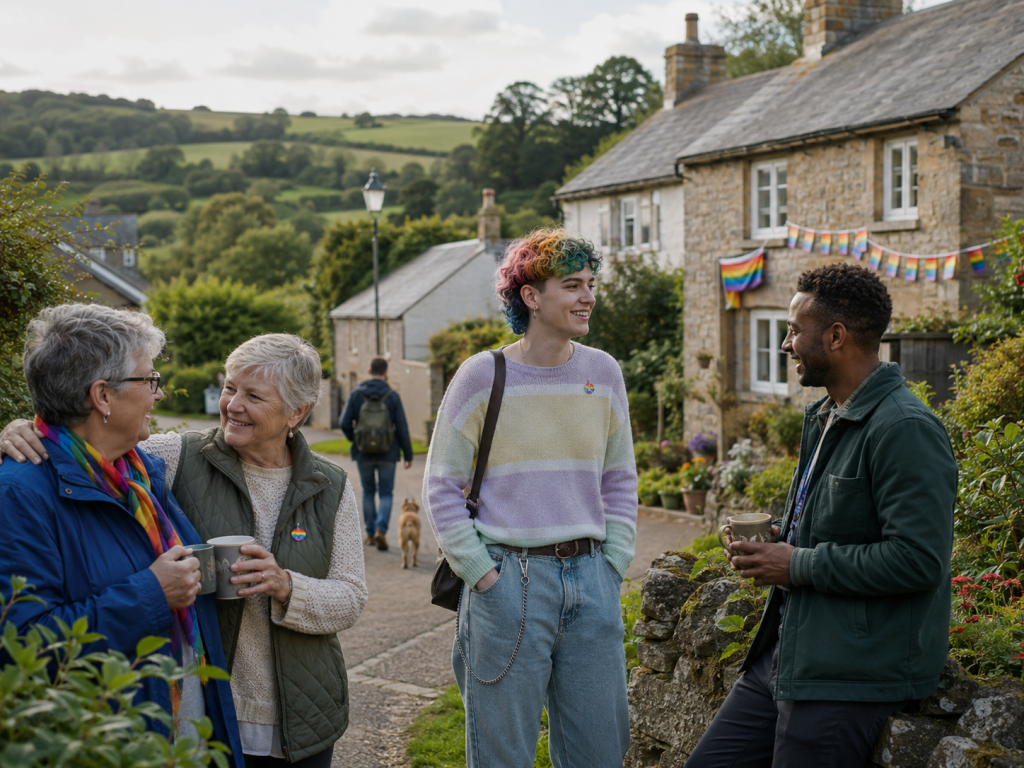
There is a tendency to assume that LGBTQ+ people will naturally gravitate towards cities, as though the countryside is something to escape. Plenty do move, and for good reasons. But many do not want to, and the assumption that they should quietly lets rural areas off the hook.
People put down roots where their family is, where their work is, where they feel they belong. An older gay couple who have lived in the same parish for thirty years should not have to move to a town to find a manageable, accessible home as they age. A young trans person should not have to choose between their community and a roof over their head. Genuinely affordable rural housing, the secure kind that a housing association provides rather than the precarious kind the open market offers, is part of what makes staying possible.
This is the honest case rather than the celebratory one. A rainbow lanyard does not house anyone. What houses people is supply, security of tenure and rents tied to local incomes. Inclusion in a rural context is built out of bricks as much as goodwill.
For a rural housing association, the practical work is mostly unglamorous and that is the point.
It means building and keeping homes that are affordable on rural wages, on the exception sites and small developments that larger developers ignore. It means allocations and tenancy practices that treat households as they actually are, including same sex couples, people who have changed their name or gender, and those who have left difficult home situations, without friction or intrusive questions. It means a clear, well-handled approach to harassment, because rural visibility cuts both ways and a complaint about anti-LGBTQ+ behaviour deserves the same seriousness as any other. And it means training frontline staff so that a tenant never has to brace themselves before explaining who they live with.
None of that is exotic. It is good housing management applied without exception.
Pride Month is useful here not as a marketing opportunity but as a prompt. It is a reminder that the countryside is not uniform, that the people who need affordable rural homes are more varied than the stock image of village life suggests, and that a home is the foundation everything else rests on. You cannot build a settled life, in or out of the closet, from a position of housing insecurity.
If the affordable rural housing crisis has a single thread running through it, it is that the people most tied to these places are often the least able to stay in them. LGBTQ+ residents sit firmly inside that group. Fixing the supply problem fixes it for everyone, and it quietly does something more besides. It tells people that the countryside is theirs too.
Web accessibility statement © English Rural Housing Association. All rights reserved. Web design and development by Nvisage


