
If you work in rural housing, 2026 has probably felt like a rollercoaster. There have been big funding announcements and anxious consultations. Planning rules have been rewritten, and at one point it looked as if half of all future rural affordable homes might be lost.
But as the year draws to a close, the picture is more hopeful than many of us expected. The countryside made its case, and on several important points the government listened.
Here’s our look back at the year: what went well, what still needs to change, and why we’re going into 2027 feeling optimistic.
The new Social and Affordable Homes Programme 2026 to 2036 opened this year, with at least £27.3 billion available through Homes England outside London. It runs for ten years, which gives housing providers something the sector has wanted for a long time: the confidence to plan ahead.
Just as importantly, the programme names rural and community-led housing as priorities, alongside a target that at least 60% of homes are for Social Rent. That’s genuinely good news for villages, where social rent homes are often the only realistic option for local people on local wages.
In August, Homes England announced its first strategic partnership allocations. The National Housing Federation called this an important step towards tens of thousands of new social homes.
From April 2026, new strategic authorities, many led by elected mayors, started taking on major housing and planning powers. Each must now produce a Spatial Development Strategy covering at least the next 20 years. That makes it one of the most important documents for deciding where homes get built.
The risk is obvious. If these strategies don’t recognise rural need, villages and market towns could lose out to larger towns and cities. The good news is that the sector moved quickly. The National Housing Federation published a new Rural Community Toolkit, and English Rural launched a free toolkit to help parish councils, community groups and councillors make sure rural voices are heard from the start.
Rural Housing Week, held from 6 to 10 July, was one of the most focused for years. Housing associations up and down the country opened their doors to MPs, councillors and residents and shared real stories of people who’ve been able to stay in the places they call home.
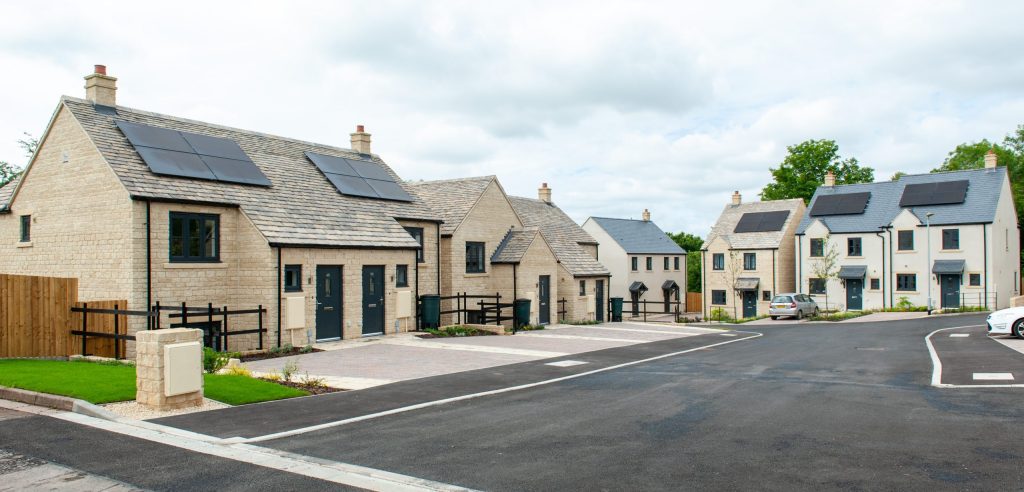
It also showed what modern rural housing can look like. In Somerset, 39 ultra-energy-efficient homes are being built using modern construction methods, a reminder that rural homes can lead the way on quality and sustainability.
This was the big one. Early in the summer, the government proposed removing the requirement for developments of 10 to 49 homes to include affordable homes on site, and letting developers pay cash to councils instead.
For rural England, that would have been a serious blow. The National Housing Federation’s analysis showed that these medium-sized sites delivered more than half of affordable homes in the most rural areas last year. Losing the requirement could have cost around 32,000 affordable homes over a decade.
The sector responded clearly, with evidence and with one voice. In August, ministers confirmed they would not go ahead with the change, acknowledging the strength of opposition. It’s a good example of what clear evidence and steady advocacy can achieve.
The new National Planning Policy Framework, published on 17 August, also gave rural exception sites clearer national support. These are small sites on the edge of villages where affordable homes for local people can be built when housing wouldn’t normally be allowed.
The new rules set out what is expected: up-to-date evidence of local need, sites that relate well to the village, and sensible limits on size. They also strongly favour approving proposals that meet those tests. Rural housing partners have welcomed this as a firmer basis for delivering homes that stay affordable for good.
None of this means the job is done. The underlying numbers are still sobering.
➡️ The gap is still wide. Only around one in ten rural homes is classed as affordable, roughly half the proportion found in towns and cities.
➡️ Demand is rising faster in the countryside. Rural housing waiting lists grew by about a fifth in three years, to more than 228,000 households. Urban waiting lists grew by 13% over the same period.
➡️ Small villages are missing out. Just 7% of new affordable homes in 2024/25 were built in settlements of fewer than 3,000 people, even though around 17% of England’s population lives in rural areas.
➡️ Homes remain out of reach. Rural house prices are around 8.8 times local lower-quartile earnings, and rural homelessness has risen sharply since 2018.
➡️ Delivery isn’t keeping pace with need. In Cambridgeshire alone, local housing needs surveys found a need for 175 affordable homes across eight communities in a single year, while 53 were completed.
There are also some practical blockers that come up again and again:
➡️ No national rural housing target. Without one, rural need can easily get lost in the bigger numbers.
➡️ Long-term support for local housing needs work. Rural Housing Enablers help communities find sites and gather evidence, and they need secure, long-term funding to keep doing it.
➡️ Making sure devolution works for villages. The new strategic authorities need to build rural need into their plans from the start, not bolt it on at the end.
➡️ Keeping on-site affordable housing protected. This year’s win was important, and we’ll need to keep making the case.
It would be easy to focus only on the challenges. But this year showed something important: when the rural housing sector speaks with one voice, backed by good evidence, it makes a difference.
We now have long-term funding that names rural housing as a priority. Planning rules give clearer support for village-scale schemes. Devolution, for all its uncertainty, gives local people a real chance to shape the future of their area. And there’s a growing body of research showing that affordable rural homes support jobs, local services and the wider economy.
The ingredients are there. The task for 2027 is to turn them into homes, in the right places, for the people who need them.
At English Rural, we’ll keep working with communities, partners and government to make that happen. If you’re a parish council, community group or landowner thinking about affordable homes in your village, we’d love to hear from you.
Web accessibility statement © English Rural Housing Association. All rights reserved. Web design and development by Nvisage


